

Think about the last time you booked a flight, moved a doctor’s appointment, or paused a subscription. You probably did it in under a minute, on your phone, without talking to anyone.
Now think about how families are forced to update a registration with many programs today. They email the office. They wait. They follow up. They wait again.
That gap between everyday digital convenience and program registration is where organizations quietly lose time, revenue, and goodwill. Closing it is what makes self-service such an advantage.
Self-service camp registration software lets families register, cancel, transfer, and join waitlists on their own schedule from any device, while automation keeps programs full with far less manual staff work. For camps, schools, and enrichment programs, that mix of family convenience and operational efficiency is fast becoming a real competitive advantage.
How have family expectations changed?
Parents can transfer money, book travel, manage subscriptions, and schedule appointments from their phones in seconds. Those experiences have reset what “easy” means.
Families also expect to act on their own schedule, not only during office hours. When your office is closed, a question or a change is put on hold until someone can get to it. Yet for many camps, schools, and programs, families are still asked to email staff, wait for a reply, and navigate manual steps to make simple updates.
The organizations winning today aren’t only offering great programs. They’re making participation easy.
A modern self-service experience reduces administrative burden, keeps programs full, and helps you operate more efficiently.
What is administrative friction costing your program?
Every cancellation, every transfer request, every waitlist inquiry, and every “can you help me find…” email seems small on its own.
Collectively, they consume hours of staff time each week. That’s time that could go to supporting participants, improving programs, and growing enrollment.
Consider where the hours actually go:
- Answering the same questions about dates, pricing, and eligibility
- Making manual edits to registrations that families could handle themselves
- Playing phone tag to fill a single open spot
- Re-keying information that families already submitted once
None of these tasks feel dramatic. But added up across a season, they represent a significant share of your team’s capacity, and a widening gap between what families expect and what many registration experiences actually deliver.
How does self-service create a better experience for everyone?
Good self-service isn’t about removing the human touch. It’s about freeing your team to spend their time where it matters most.
With Camp & Class Manager, families can:
- View detailed program information before they commit
- Manage their own registrations independently
- Cancel registrations within your existing policies
- Transfer between eligible programs
- Access everything from any device, at any hour
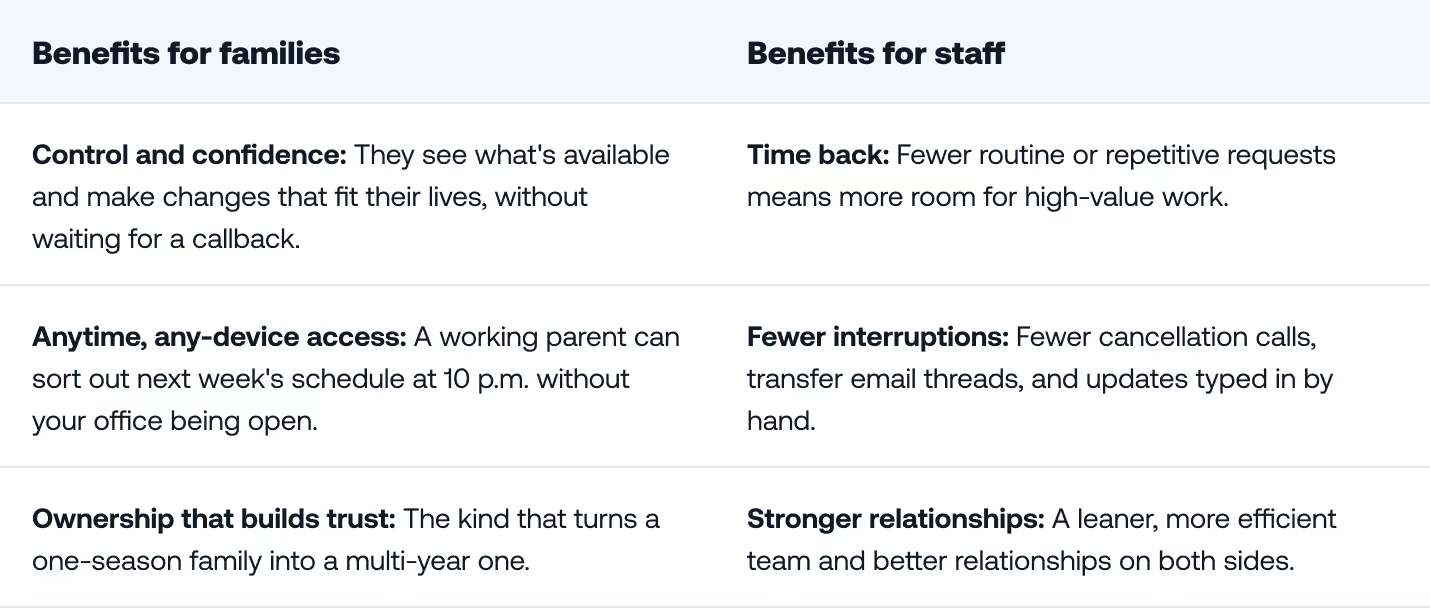
When those everyday tasks move to self-service, both sides of every interaction win: Families gain independence, and your staff gain their time back. Here's how that plays out.
Can self-service actually improve staff productivity?
Yes, and the effect compounds. When online camp registration handles the routine tasks, your staff can focus on the high-value work software can’t do.
That might mean welcoming new families, improving program quality, or planning next season’s offerings instead of processing this season’s paperwork.
Smaller teams often feel the difference most. When one or two people handle registration, communication, and program delivery all at once, every hour returned to them is meaningful.
Productivity here isn’t about doing more with less, it’s about removing low-value tasks so your people can do the work only they can do.
How can you keep programs full without manual work?
Waitlists have traditionally been one of the most time-consuming parts of program management.
A spot opens. A staff member checks the list. They call or email the next family. No response. They move to the next name. Repeat.
Automated waitlist software changes that. Auto-waitlists automatically fill openings as capacity becomes available, so a canceled spot doesn’t sit empty while staff work down a list by hand.
For growth-focused organizations, keeping programs full is one of the easiest ways to increase revenue—without launching a single new program.
Read the case study: How Florida State University is Transforming Operations with Camp & Class Manager
Every filled seat is revenue you already earned the right to. You just needed a faster way to capture it.
The next evolution: SMS-powered waitlists
Email still matters, but habits keep evolving. Many families now read a text within minutes and an email within days.
SMS-powered waitlists notify families immediately when a spot opens. Instead of waiting for someone to check their inbox, the offer reaches them right away, resulting in programs that fill faster.
The experience is better for families, too. They hear about openings while they’re still interested, not after the moment has passed.
For popular programs that fill quickly and cancel often, that speed can be the difference between a full roster and an empty seat.
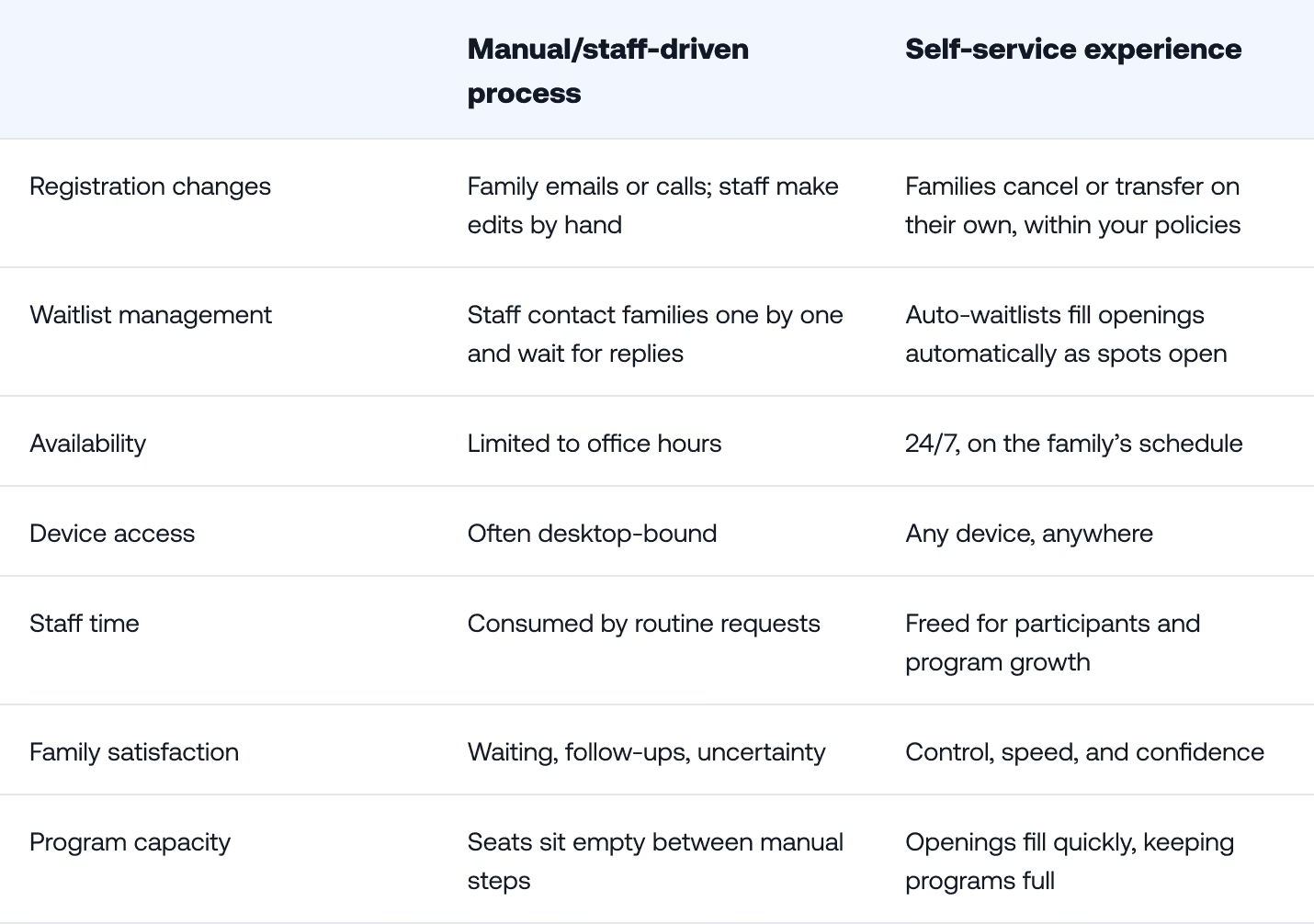
Manual processes vs. self-service: a side-by-side look
Here’s how a manual, staff-driven approach compares with a modern self-service experience across the dimensions families and staff feel every day.
Why is great usability no longer a nice-to-have?
Registration software used to be judged mostly on operational functionality. Could it take a payment, hold a roster, or run a report?
Today, organizations are judged on the experience they deliver. Parents compare every interaction to the best digital experiences they use daily, from banking apps to retail checkouts.
Mobile camp registration isn’t a bonus feature anymore; it’s the default expectation. A registration experience that works well on a phone signals that your program is organized, modern, and easy to work with.
When participation feels easy, families notice. They register sooner, return more often, and recommend you to others.
That’s why usability has moved from a technical detail to a genuine differentiator. The programs that make signing up and staying enrolled easy are the ones that grow.
What should you look for in self-service camp registration software?
Not every tool labeled “self-service” delivers the same experience. As you evaluate options, look for a few essentials:
- Independent registration management so families can cancel and transfer within your policies without contacting staff
- Any-device access so families can act from a phone, tablet, or computer
- Automated waitlists that fill openings without manual outreach
- SMS notifications so time-sensitive openings reach families fast
- Clear program information that helps families choose confidently before they register
The goal is simple: Make participation easy for families and light on your team. When you do both at once, self-service stops being a convenience and starts being a reason families choose you over the program down the street.
Ready to give families the self-service experience they expect and give your team hours back each week?
See how Camp & Class Manager makes it happen.
Schedule a demo, and we’ll walk through it together.
Frequently Asked Questions
What is self-service camp registration software?
It’s software that lets families handle their own registration tasks—viewing program details, registering, canceling within policy, transferring between eligible programs, and joining waitlists—from any device, without needing to contact staff directly.
How does self-service reduce administrative burden?
It removes the routine, repetitive work that fills a staff member’s day. When families make their own changes and automated waitlists fill open spots, your team handles fewer calls, emails, and manual updates, and gets time back for higher-value work.
Do auto-waitlists really help keep programs full?
Yes. Instead of staff manually working down a list when a spot opens, automated waitlist software fills openings as capacity becomes available. That reduces empty seats and helps you capture revenue you’ve already earned.
What are SMS-powered waitlists?
SMS-powered waitlists send families a text as soon as a spot opens, rather than relying only on email. Because texts are read quickly, spots fill faster and families hear about openings while they are still interested.
Is self-service only useful for large programs?
No. Programs of every size benefit. Smaller teams often feel the relief most, because a single staff member may be handling registration, communication, and program delivery all at once.




.png)